Guide
The Roman Dodecahedron Knitting Theory, Tested Against the Evidence
Key points
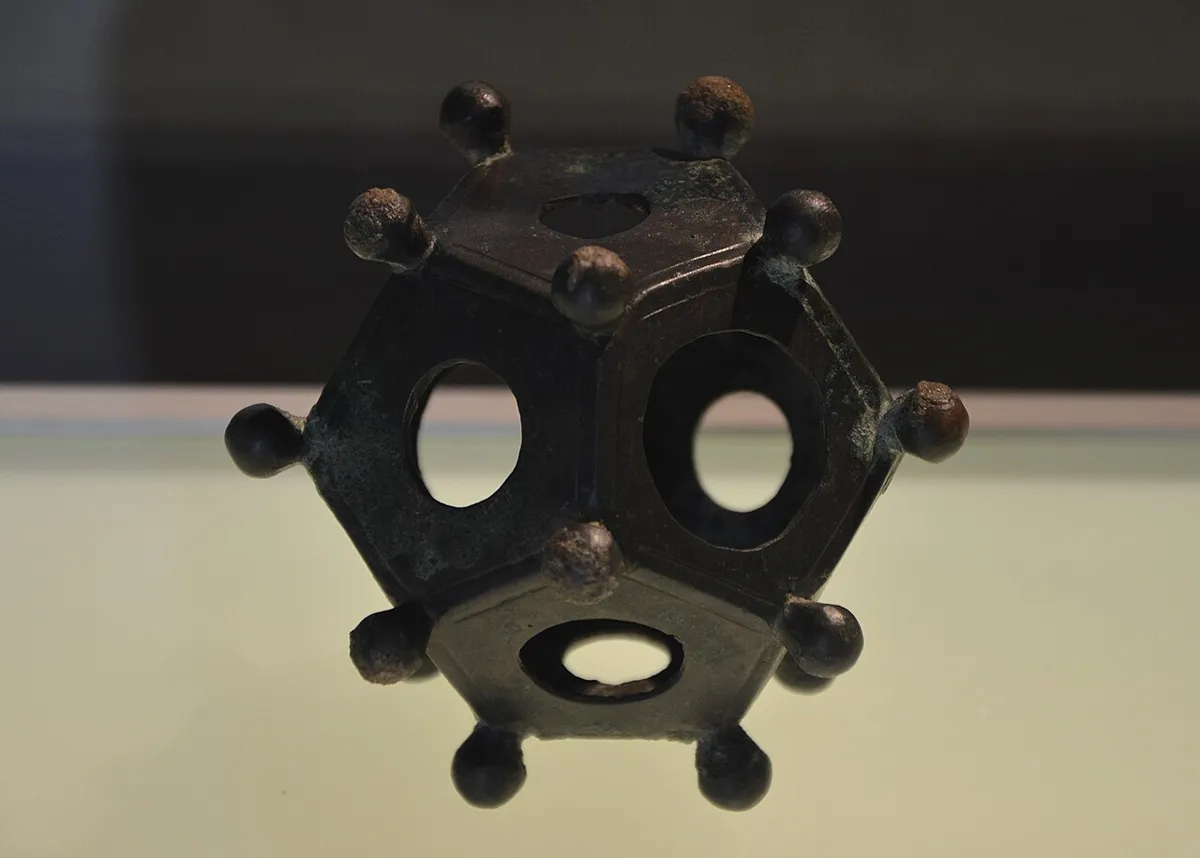
The idea
Spool knitting (also called French knitting) loops yarn around a ring of pegs to make a tube. The knobs around each hole of a dodecahedron could, in principle, act as pegs, and different hole sizes could suit different finger sizes. Wikipedia lists spool-knitting devices for making gloves among the speculative uses.[W]
The problems
| Issue | Detail |
|---|---|
| Date | Earliest known reference to spool knitting is 1535, over a thousand years later[W] |
| Material | Bronze casting would be costly for a simple knitting aid[W] |
| The icosahedron | The similar Arloff icosahedron is missing the holes needed for spool knitting[W] |
| Decoration and wear | Most dodecahedra are decorated and rarely show signs of wear[W] |
Verdict
It is physically possible to knit around the knobs, but nothing ties the practice to the Roman period. Treat it as an interesting modern experiment, not an answer.
FAQ
Can you knit on a Roman dodecahedron?
The knobs can act as pegs for spool knitting, but there is no Roman evidence that anyone did.
Why do historians doubt it?
Spool knitting is first recorded in 1535, bronze would be an odd choice, and the related icosahedron lacks the holes needed.