Buying guide
How to Choose a Roman Dodecahedron Replica
Key points
- Originals were lost-wax cast copper alloy, 4–11 cm, 35 g–1 kg.[W]
- Look for: real metal, a stated original it copies, unequal hole sizes and a knob on every corner.
- Our cast replica copies the Brian Campbell dodecahedron at 1:1: 10.05 cm, just under 600 g.
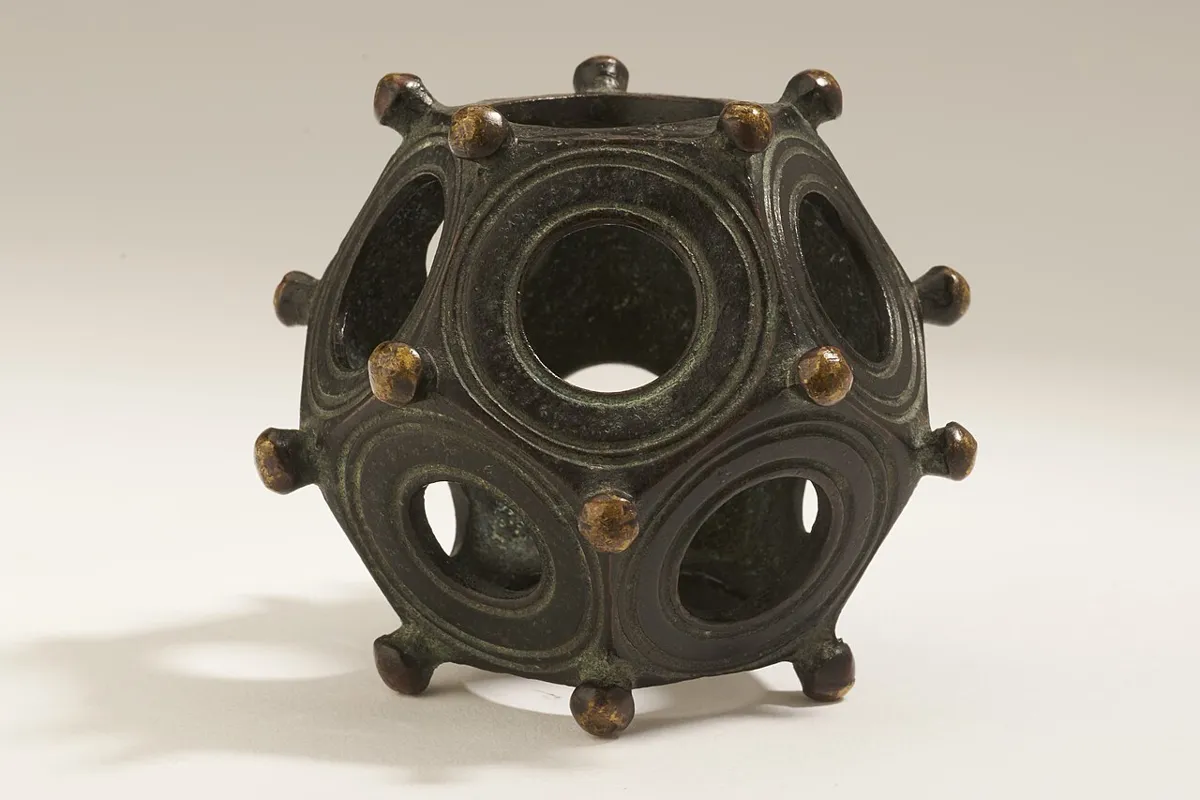
Replica types compared
| Type | Material | Weight | Closeness to originals |
|---|---|---|---|
| Lost-wax cast brass or bronze | Metal, like the originals | Heavy | Matches the original method |
| Resin or plastic | Non-metal | Light | Shape only |
Checklist
- Material: originals are cast copper alloy.[W]
- A named original: a replica should say which find it copies.
- Hole sizes: every face should have a different hole.[W]
- Knobs: one on each of the 20 corners.
- Rings: concentric circles around the holes are the most common decoration.[W]
- Size: originals range from 4 to 11 cm.[W]
Our replica
Ancient3DCrafts' replica is lost-wax cast in 100% solid brass (US$149.99) or solid bronze (US$179.99), 10.05 cm edge to edge, just under 600 g, with an antique electroplated finish and a lifetime guarantee. Hole placements come from photo examination of the Brian Campbell dodecahedron, found in England in 1987. It is backordered and ships late November 2026. See the Roman dodecahedron replica →
As a gift
A cast dodecahedron suits history and archaeology enthusiasts, collectors and anyone who likes an object that starts conversations on a desk or shelf.
FAQ
Is a replica a real artifact?
No. Replicas are modern objects for display and study.
How do I know a replica is accurate?
Check it names the original it copies, uses metal, and has a different hole size on every face.