
History · Finds
The Tongeren Dodecahedron and Belgium's Gallo-Roman Finds
Key points
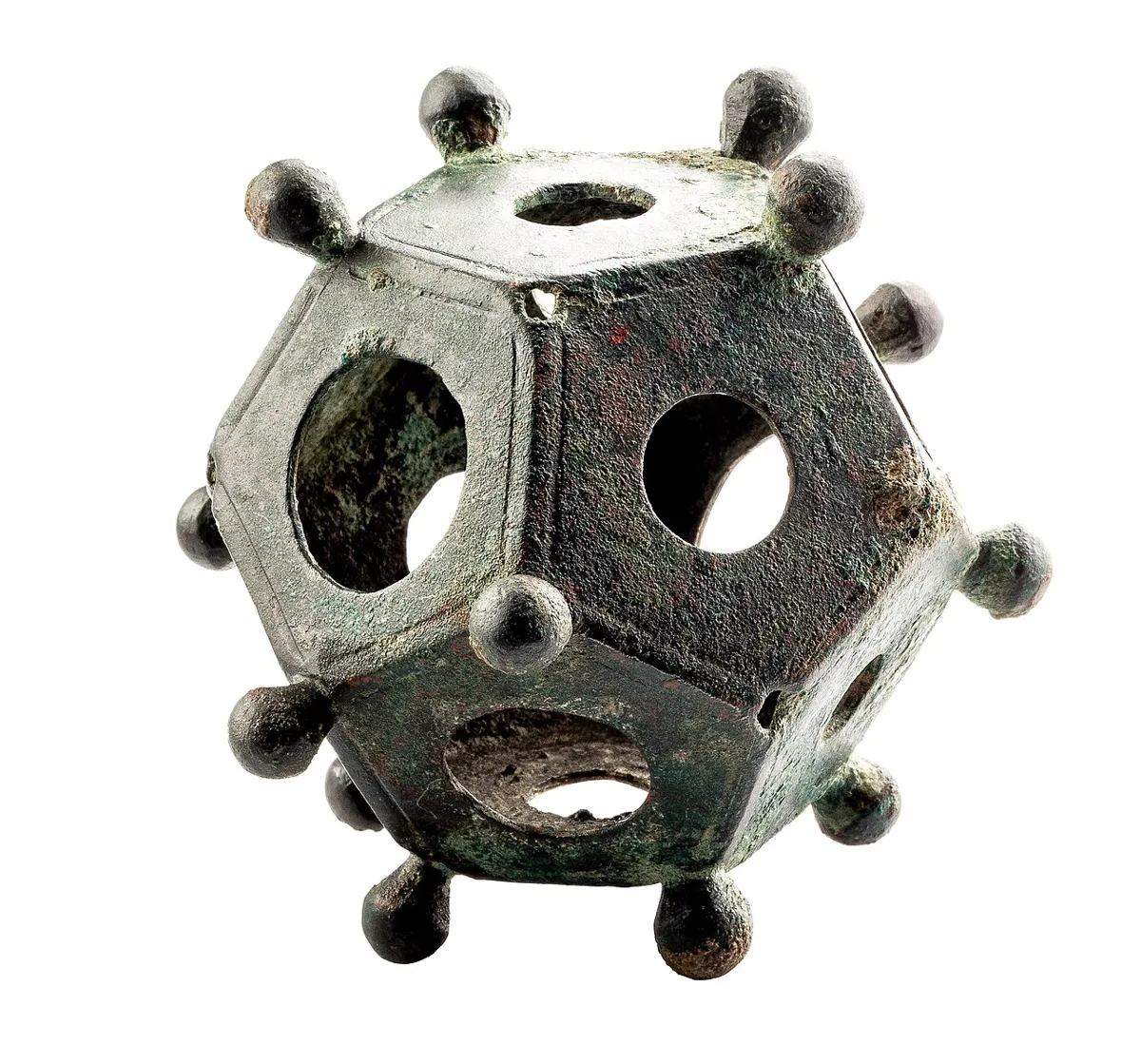
The 1939 find
Tongeren, the oldest town in Belgium and a Roman city, has produced one of the best-known Gallo-Roman dodecahedra. It was found in 1939 just outside the Roman city walls and is displayed at the Gallo-Roman Museum.[LS] The Wikimedia Commons record for the museum's photograph gives the date range AD 150–400, the find spot Leopoldwal and the museum number 4002.[W]
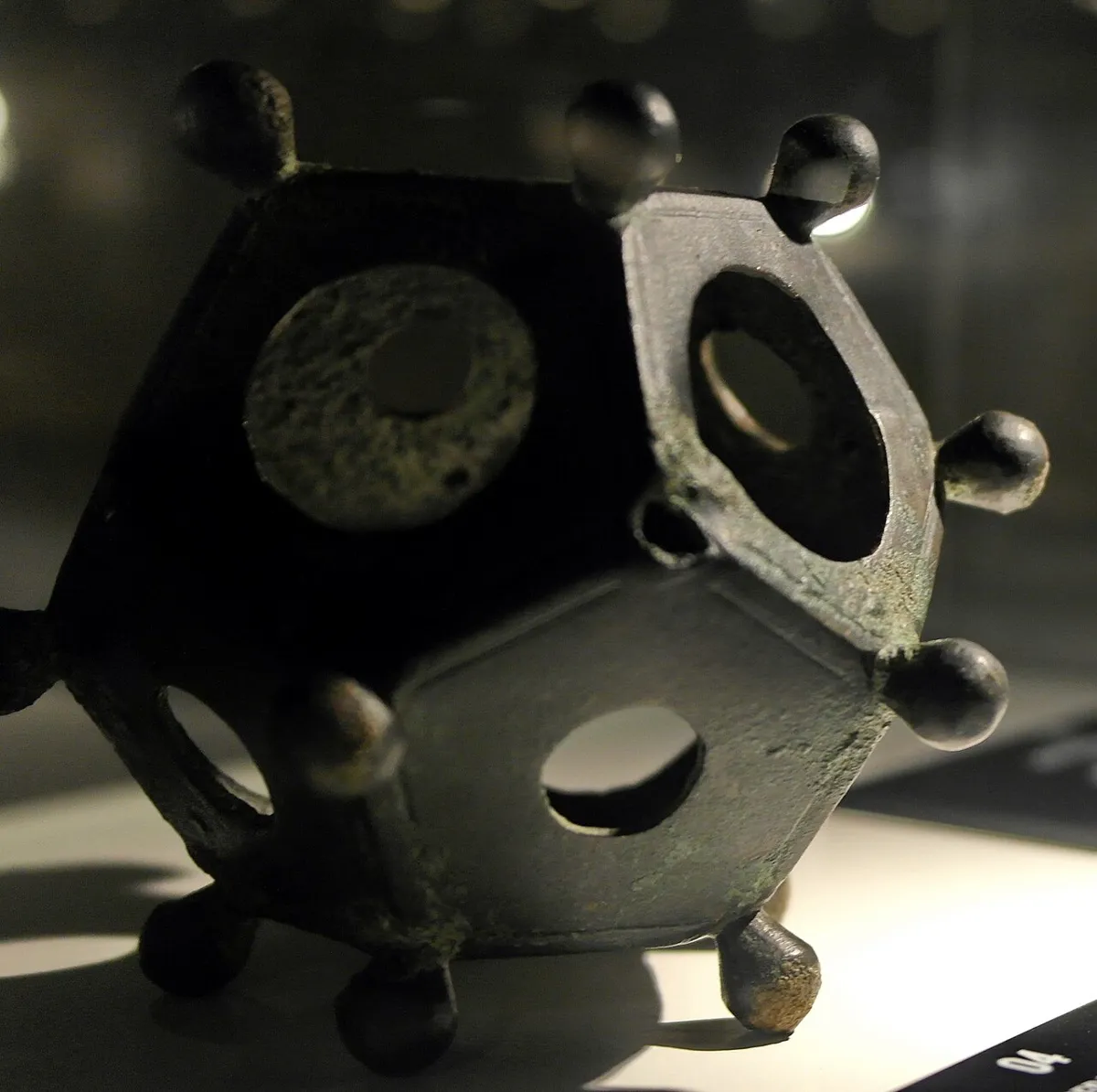
The Kortessem fragment (2023)
Metal detectorist Patrick Schuermans found a fragment in a ploughed field near Kortessem, in Flanders. It is one corner with a single knob, from a dodecahedron that originally measured just over 5 cm across. The museum identified it in December 2022 and put it on display next to the 1939 piece.[LS]
The Flanders Heritage Agency said the fractured surfaces suggest it was deliberately broken, possibly during a final ritual. Wall-painting fragments at the site point to a possible Roman villa. Because the finder recorded the spot properly, it was the first time archaeologists knew the exact find location of a dodecahedron in Flanders.[LS]
What the museum thinks
Curator Guido Creemers told Live Science that ideas such as a calendar, a land-measuring instrument or a sceptre are not satisfying, and that the museum thinks the objects had to do with unofficial activities like sorcery and fortune-telling.[LS] See the ritual and divination theory.
At a glance
| Find | Condition | Where it is |
|---|---|---|
| Tongeren (1939) | Complete, bronze | Gallo-Roman Museum, Tongeren[LS] |
| Kortessem (2022–23) | Corner fragment, about 5 cm original size | Shown beside the Tongeren piece[LS] |
| Bassenge (1888/89) | Complete, 4.5–4.8 cm | Grand Curtius, Liège[GC] |
Visiting
The Gallo-Roman Museum's website has opening times. Displays change, so check before you travel. Our museum guide lists other places to see one.
FAQ
Where is the Tongeren dodecahedron?
At the Gallo-Roman Museum in Tongeren, Belgium.
When was it found?
In 1939, just outside Tongeren's Roman city walls.
What is the Kortessem fragment?
A single corner of a dodecahedron, found by a metal detectorist near Kortessem and identified by the museum in December 2022.
Sources
- [LS] T. Metcalfe, “Mysterious 12-sided Roman object found in Belgium may have been used for magical rituals,” Live Science, 26 Jan 2023
- [W] Wikipedia, “Roman dodecahedron” (accessed Oct 2026)
- [GC] Grand Curtius, Liège, “Dodecahedron” (collection page)
- [GRM] Gallo-Roman Museum, Tongeren (official site)
Want a Gallo-Roman dodecahedron on your desk? Our bronze dodecahedron replica is cast by the lost-wax method.